Remote Work's Effect on Real Estate Prices

Housing prices have continued to rise; the economic and social factors behind these increases are often misunderstood. The rise of remote work after COVID directly contributed to higher housing prices by increasing demand for larger homes, encouraging people to move away from major cities, and intensifying competition in suburban housing markets.
Since COVID, many workplaces shifted away from in-person operations because offices were no longer safe or practical. As people began working from home, there was less of a need for in-person work centers. In some cases, workers’ efficiency also increased. People now “typically work from home 2 or 3 days a week and commute to business premises the rest of the week” (Barrero et al.). This was a change in lifestyle for both workers and companies. This new work style also created new lifestyle benefits for workers.

Figure 1. Post-COVID-19 Remote Work Preferences. This visual shows the divide between employees and executives over how many days workers should be in the office after COVID
Working at home for workers had its own advantages. It offered greater convenience. Rather than having to commute to work daily, they could have days off from commuting. In the comfort of their homes, they could complete all their work tasks. Moreover, it also allowed for a lifestyle shift. Some workers could manage family responsibilities more easily, such as taking breaks to drop their children off at school or prepare meals at home. Not only that, a lot of people no longer have to pay as much, which is also a cost-saving aspect for parents.
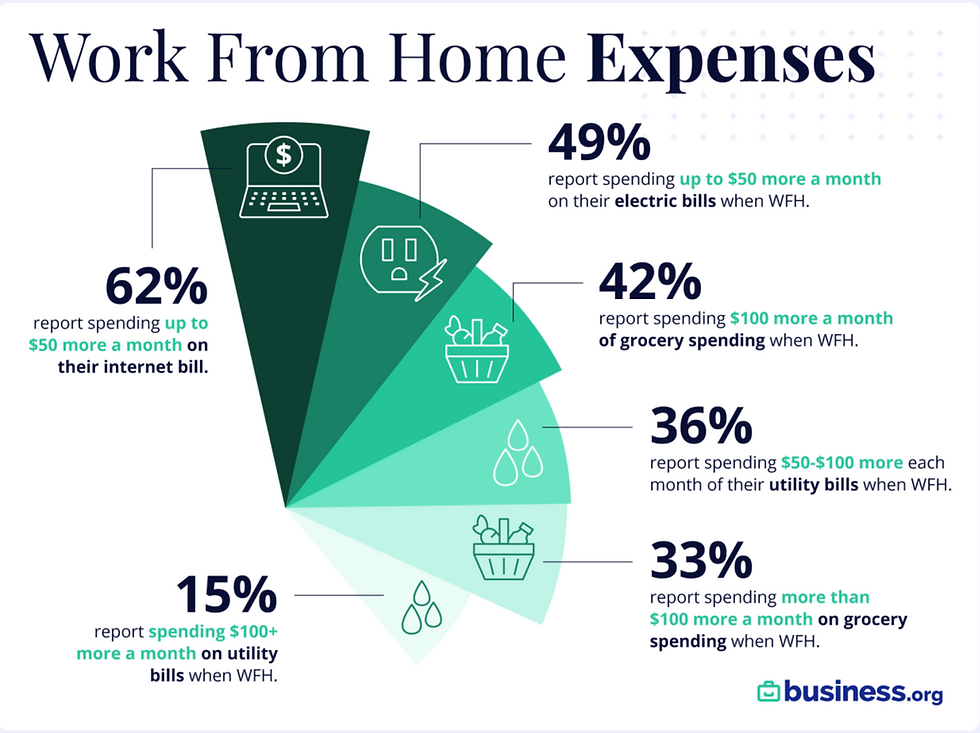
Figure 2. Work From Home Expenses. This visual shows that working from home can also increase household expenses, which adds balance to the discussion of remote work’s financial effects.
The growth of remote work was especially concentrated in larger cities. When the transition to remote work happened, it was largely rooted in major cities. During the COVID-19 pandemic, large cities faced major challenges in containing the spread of the virus. With this in mind, many big cities began moving toward remote work, “in higher-density locations, such as cities and suburbs, than in more sparsely populated places and rural areas” (Barrero et al.). This is the reason why this shift is concentrated in cities.
When working from home became more common, people wanted a change in their lifestyle. Many individuals worked in dense metropolitan areas, where noise, congestion, and high living costs were common. When given the opportunity, people began moving from cities to more suburban areas. A big reason for this shift is that “a work-from-home environment may increase demand for housing because jobs done previously in an office environment will likely use additional space and time at home” (Karageorge). With the shift to remote work, many people needed more space to work efficiently, avoid interruptions during virtual meetings, and create a separate workspace. Due to this, there is also a shift in making sure there is enough space to work efficiently and effectively.
However, this extra space is often difficult to find or afford in cities. Since their pay has not changed, people cannot always move into a different apartment or house, as this would affect their total take-home pay. Rather than stay in the city, people are optimizing by moving to cheaper alternatives in suburban areas. This is beneficial because it allows them to have more space in their homes while also being more cost-efficient.
These changes were especially visible in major cities such as New York City and Los Angeles. People started moving out of these larger cities and into suburban areas. More than just moving, people began to value their overall quality of life. They wanted a better work-life balance and a simpler, quieter lifestyle.
When this shift to suburban living began, the housing market saw a major boom. People were more willing and excited to buy houses and move out. The market supported this, as “short-term interest rates were slashed to zero and central banks bought large amounts of long-term government bonds, driving long-term bond yields to historically low levels” (Van Nieuwerburgh). With this influx of people moving out of cities and into suburban areas, there were simply fewer houses available. The construction industry also faced shortages of materials, such as lumber, which slowed the building of new homes. According to basic supply and demand, when demand rises while supply remains limited, prices increase. To correct this, economically there is an increase in price to counteract this increased demand. This imbalance caused prices to rise even faster.

Figure 3. Annual Real Growth Rate of Housing Prices, 2016–2021. This graph shows that housing price growth rose sharply after 2020, especially in certain cities, supporting the idea that the pandemic and remote work increased housing demand outside major urban centers.
COVID caused this sudden shift to remote work, while also creating major economic uncertainty.As people were already shifting and buying more houses, the government also supported this with lower interest rates and mortgage loans. This then supported the demand that was already stimulated by the shift from in-person to remote work.
This all goes hand in hand with why consumers were so willing to move. To them, this was a bonus; they already had remote work, and now they were building a better environment for themselves. Financially, they benefited from lower interest rates and mortgage rates. This gave some buyers the opportunity to afford more space than they could have in major cities. This continued the boom in real estate, as people not only had the need to move but also had better financial motivation to continue this shift.
However, as time progressed and the economy adjusted after the height of the pandemic, inflation increased significantly. “Central banks have begun to tighten short rates” (Van Nieuwerburgh). At this point, the effects of remote work became connected to broader problems in the real estate market.
Rising house prices also made it harder for ordinary buyers, especially first-time homebuyers. Many were unprepared for the market and did not have enough savings or income to buy a home. This caused tons of people to be phased out of the market itself, not being able to afford it with the changing times. It didn't help that rent also increased with the changing and shifting of the market. However, this definitely was a change that affected the lower-income families more. It made it harder for them to afford rent and maintain a comfortable standard of living. But more than just the short-term effects of this shift to remote and hybrid work, what changes does this bring to the overall housing market?
In the long term, remote work reshaped the housing market by increasing demand in suburban areas. As people started moving into suburban homes, it increased the overall suburban housing market. People moving out of crowded cities into smaller towns caused a boom in these areas. Housing supply could no longer match demand. Demand also could not keep up with labor shortages or construction delays, which contributed to rising prices.
In terms of offices and workspaces, we also began to see a shift in efficiency and the number of people coming into work. There was a noticeable decrease in office attendance.
Research found that Chicago and Los Angeles reached post-pandemic office occupancy highs of 55% and 51%, respectively, not even reaching two-thirds capacity (Bloomington IN). We can see that this is affecting not only the housing market but also the market for commercial and office spaces.

Figure 4. U.S. Office Performance Metrics. This visual shows that office vacancy rates continued rising after 2020, supporting the idea that remote and hybrid work affected commercial real estate.
Compared to pre-pandemic levels, when office occupancy was around 95%, this is a major shift. Companies are now investing less in these spaces and more in other areas of their business rather than physical office space. This trend is also associated with the increasing value placed on work-life balance. As mentioned, “increasingly employees are interested in flexibility and freedom in their workplaces” (Sánchez-Hernández et al.). People are willing to sacrifice pay or job location to achieve this balance.
In the future, this trend is likely to continue. As hybrid and remote work remain common, many companies are choosing to maintain this structure, which people appreciate as a trade-off, even if they commute slightly longer on some days. This could lead to increased housing prices outside of cities. However, rising interest rates and economic uncertainty could slow demand over time, making housing less affordable. Because remote work has changed both housing demand and office use, cities should focus on building more affordable housing in high-demand suburban areas while also finding new uses for underused office spaces. While the impact of remote work has begun to level off, the changes it causes in where people live, how much space they need, and how they balance work and home life will continue to influence housing prices and consumer behavior.
References:
Barrero, Jose, et al. The Evolution of Working from Home. July 2023.
Bloomington IN. “Remote Work and Its Effect on Real Estate.” Raymondjames.com, Bloomington IN 3FX, 2023, www.raymondjames.com/bloomington-branch/commentary-and-insights/2023/09/25/remote-work-and-its-effect-on-real-estate.
Business.org. “Work from Home Expenses.” Business.org, Ewscripps.brightspotcdn.com, 2023.
EconoFact. “Annual Real Growth Rate of Housing Prices: National and Four Cities, Quarterly Data at an Annual Rate (2016–2021).” EconoFact, Federal Housing Finance Agency and Federal Reserve Economic Data, Econofact.org.
Gupta, Arpit, et al. “Work from Home and the Office Real Estate Apocalypse.” SSRN Electronic Journal, 2022, https://doi.org/10.2139/ssrn.4124698.
Karageorge, Eleni. “Remote Work to Blame for Rise in Housing Prices: Monthly Labor Review: U.S. Bureau of Labor Statistics.” Www.bls.gov , Apr. 2023, Www.bls.gov/Opub/Mlr/2023/Beyond-Bls/Remote-Work-To-Blame-For-Rise-In-Housing-Prices.htm .
Moody’s CRE. “U.S Office Performance Metrics.” Moody’s CRE, 2024.
PwC. “Post-COVID-19: U.S. Employees, Execs Differ over Number of Days Workers Should Report to Office. ” PwC U.S. Remote Work Survey, PwC, 2021.
Sánchez-Hernández, M Isabel, et al. “Work-Life Balance in Great Companies and Pending Issues for Engaging New Generations at Work.” International Journal of Environmental Research and Public Health, Vol. 16, No. 24, 5122, 15 Dec. 2019, doi:10.3390/ijerph16245122.
Van Nieuwerburgh, Stijn. “The Remote Work Revolution: Impact on Real Estate Values and the Urban Environment.” Real Estate Economics, vol. 51, no. 1, 26 Dec. 2022, https://doi.org/10.1111/1540-6229.12422.


